


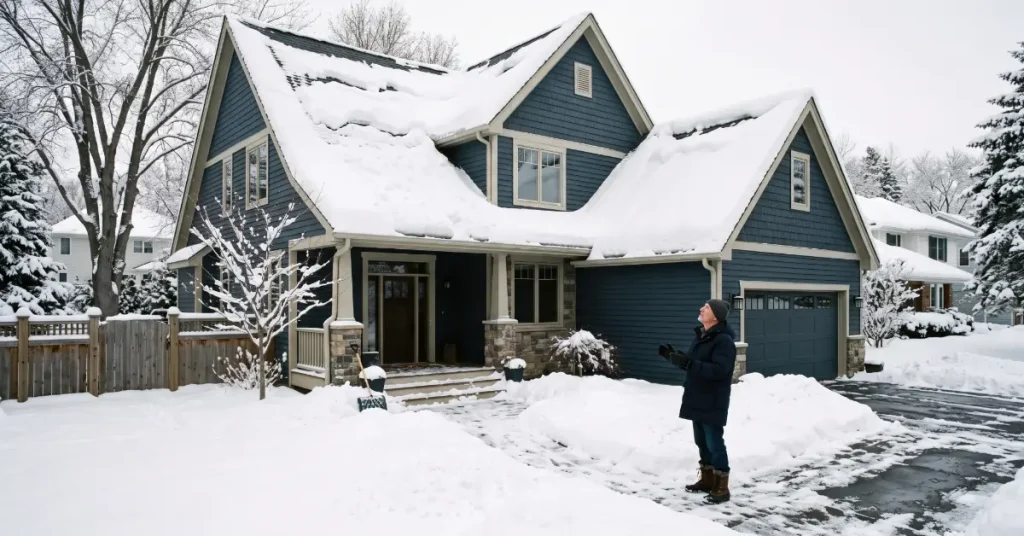
Moss Roofing has inspected roofs across central Indiana for decades, and one story comes up every fall. A summer hailstorm leaves marks most homeowners never see, and then winter goes to work on them. Hail damage to roof shingles rarely stays the same size. Cold nights, warm afternoons, snow, and ice all find the weak spots hail left behind.
If you’ve put real money into your home, the roof protects all of it. That includes finished rooms, updated kitchens, and the value buyers and appraisers will see someday. Knowing what winter does to a roof with hail damage helps you decide when to act and what to do first.
The right timing can protect your home, your insurance claim, and your budget. It starts with knowing what the damage looks like and how Indiana’s freeze-and-thaw season changes it.
How You Can Spot Hail Damage to a Roof
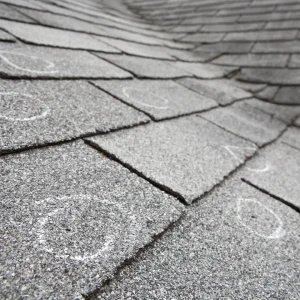
Hail damage on a roof usually looks like dark, round spots where the hailstone knocked away the shingle’s protective granules. Some spots feel soft, like a bruise on fruit. Others show cracks, torn edges, or the exposed mat underneath. Granules piling up in gutters or at the bottom of downspouts are another sign.
Size matters, but not the way many people think. Hail one inch or larger is considered severe. Research from the Insurance Institute for Business & Home Safety (IBHS) found that repeated hits from smaller hail can weaken shingles, too. In lab testing, two years of small hail plus normal aging left shingles performing more like they were ten years old.
Can You See Hail Damage From the Ground?
Usually not. Shingle damage is often too small to spot from the yard, and some of it hides under granules that still look normal. A roof can have hail damage that isn’t visible at all until water finds it.
Softer metals tell a better story. Check gutters, downspouts, vents, and window screens for dents or chipped paint. If those show marks, the shingles likely took hits too. Stay off the roof yourself, especially once frost and ice arrive.
Does Hail Damage Always Cause Leaks?
No, at least not right away. Many roofs with hail damage stay dry through the fall. The shingles still shed water, just with less protection than before. The trouble is that the damage keeps aging. Once granules are gone, sunlight and moisture wear down the asphalt faster. A dry ceiling today doesn’t mean the roof is ready for the winter ahead.
Can Hail Damage Get Worse Over Time?
Yes, and winter is when it speeds up. A hail-damaged roof in Indiana faces months of cold, wet conditions that test every weak point. Bruised shingles lose their grip on granules. Small cracks let in a little water. Each storm and each cold snap adds to the wear the hail started.
The IBHS study found that shingles weakened by small hail and normal aging became about ten times more likely to be damaged by later severe hail. That matters for Indiana homes, since a roof that gets through one winter with hidden damage still has to face next spring’s storm season. A roof works as a system, and one weak area puts more strain on the parts around it.
How Freezing and Thawing Affects a Hail-Damaged Roof
Indiana winters between freezing and above freezing all season. According to the Indiana State Climate Office at Purdue University, average January highs run from about 32 degrees in the north to 39 degrees in the south, while lows average 17 to 22 degrees.
That swing is hard on damaged shingles. Water seeps into cracks and bruised spots during the day, then freezes overnight. Ice takes up more space than water, so it pushes those openings wider. After enough cycles, a small crack can become a path for water to reach the roof decking.
Can Ice Dams Form on a Roof With Hail Damage?
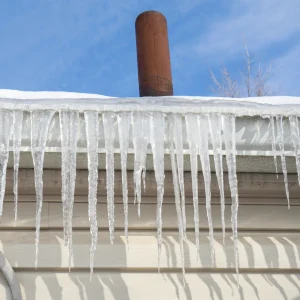
Yes. Ice dams form when heat from the house melts snow on the roof, and that water refreezes at the colder edge. When water backs up behind an ice dam, it can leak into walls, ceilings, and insulation.
Hail damage doesn’t cause ice dams, but it makes them riskier. Water held behind the ice sits against shingles that may already have cracks or missing granules. That gives it an easier way under the roof surface.
Will Snow Sitting on a Damaged Roof Cause More Problems?
It can. Snow holds moisture against the shingles for days or weeks at a time. On a healthy roof, that’s rarely an issue. On a roof with hail damage, steady moisture has more time to work into weak spots. Melting snow also feeds ice dams at the eaves. Clearing the lower edge with a roof rake from the ground can help, but it won’t fix the damage underneath.
Is It Safe to Wait Until Spring to Fix Hail Damage?
Waiting can work in some cases, but it’s a gamble with your home and your claim. Minor damage on a newer roof may hold through winter. Damage near valleys, vents, or eaves carries more risk, since those are the areas where water and ice collect.
Insurance gives you another reason not to wait. The Indiana Department of Insurance notes that homeowners’ policies may require you to make temporary repairs to protect your home from further damage. It also warns that an insurer may deny a claim if permanent repairs happen before the damage is inspected. The safest path is simple: get an inspection, document the damage, and protect the roof until the full repair is done.
Can a Roof Be Repaired or Replaced in Winter in Indiana?
Yes. Roofers work through Indiana winters, though cold days take more planning. Asphalt shingles seal best in milder temperatures, so crews schedule around warmer days and follow the manufacturer’s cold-weather installation guidelines. Repairs and temporary protection, like sealing damaged areas or tarping, can happen on most dry, safe days. For a full replacement, a contractor can help you weigh winter scheduling against waiting for spring.
Repair or Replace a Roof With Hail Damage?
The right choice depends on how much of the roof took hits, its age, and its condition before the storm. Scattered damage on a younger roof is often a good fit for storm damage roof repair. Widespread bruising, heavy granule loss, or damage on an older roof usually points toward replacement.
Damaged shingles also affect the rest of the roof system. Water that slips past them can reach the underlayment, decking, and attic insulation. An unfixed roof won’t fail on a set schedule, but its useful life gets shorter each season. When replacement makes sense, Moss Roofing is an Owens Corning® Platinum Preferred Contractor and also installs Malarkey® and IKO® shingles, so a new roof protects the value you’ve built into your home.
Hail Damage Roof Insurance Questions
Hail is one of the most common reasons homeowners file property claims. The Insurance Information Institute reports that roof damage makes up an estimated 70 to 90 percent of insured home losses tied to hail. Because these claims are so common, insurers look closely at timing, documentation, and the roof’s condition before the storm.
Before filing, find your policy and check your deductible. Some policies in hail-prone areas carry a separate wind and hail deductible, which may be different from your standard one. Knowing that number helps you decide whether a claim makes sense for the damage you have. If the repair cost is close to your deductible, an inspection report gives you a clearer picture before you call your insurer.
How Long Do You Have to File a Hail Damage Claim in Indiana?
There’s no single deadline that fits every homeowner. The time limit comes from your policy, and it varies by insurer. The Indiana Department of Insurance advises notifying your insurance company right away once you find damage. Look in your policy for terms like “notice of loss” or “time limit to file.” If you can’t find it, call your agent and ask for the exact deadline in writing.
Will Insurance Cover Winter Leaks Caused by Hail?
It depends on your policy and how well the damage is documented. Insurers often separate sudden storm damage from wear and tear or damage that grew because it wasn’t addressed. That’s why delay can hurt a claim. A winter leak traced to a hailstorm from months earlier is harder to connect to that storm without photos, dates, and an inspection report. Early documentation keeps that link clear.
Does a Hail Damage Claim Raise Home Insurance Rates?
It can, but not always. Rate changes depend on your insurer, your policy, and your claim history. Moss Roofing answers this question in detail in Does a Hail Damage Claim Raise Your Insurance Rates? Worry about a rate increase shouldn’t keep you from reporting real damage that could cost more to fix later.
Who Should Inspect a Roof for Hail Damage?

A local roofing contractor with a history you can verify is the best choice. After storms, door-to-door crews often show up offering free inspections. The Indiana Attorney General has warned homeowners to be careful with strangers who make that offer, since some are storm chasers who take payment and never finish the work.
Moss Roofing is a family-run company with three locations across the Indianapolis area. You can check our reviews, our address, and our manufacturer credentials before anyone climbs a ladder. Indiana law protects you, too. According to the Indiana Attorney General’s Consumer Protection Division, home improvement contracts over $150 must be in writing, and homeowners generally have three business days to cancel.
What Happens During a Hail Damage Roof Inspection?
A Moss Roofing inspector checks the shingles for bruising, cracks, and granule loss. The inspection also covers flashing, vents, gutters, and other metal surfaces where dents show clearly. Where it’s safe, the inspector looks in the attic for signs of moisture. You get photos and a clear explanation of what the hail did, what needs attention before winter, and whether the damage is worth taking to your insurance company.
Find Out Where Your Roof Stands Before Winter Does
Hail damage doesn’t always show from the ground, and winter is when small problems turn into leaks. Moss Roofing offers a free inspection for homeowners across the Indianapolis area. We’ll give you an honest assessment of what the hail did, what winter could do to it, and whether a repair or a claim makes sense. If there’s damage, we document it so you have what you need for your insurance company.
When you choose Moss Roofing, you aren’t just a name on a list. You are a valued customer, and we’ve treated our neighbors that way since 1991.


