


A storm rolls through Central Indiana, and by morning there is a stain spreading across your ceiling. At Moss Roofing, a family-run company, we have helped Indianapolis homeowners through that moment since 1991, and we know the questions that come next. Who should you call? What needs to happen today? What can wait until a proper plan is in place?
Emergency roof repair has two goals. The first is stopping water before it reaches your drywall, hardwood floors, and custom millwork. The second is making sure the work holds up long after the storm has passed. A rushed job can protect your home for a week. A repair done right protects it for years.
The right first steps, a clear scope of work, and a qualified roofing contractor make all the difference.
What to Do Right Away If Your Roof Is Leaking After a Storm
Start with safety. Stay off the roof, even if the damage looks minor. The National Roofing Contractors Association advises homeowners to inspect only from the ground and leave rooftop work to trained professionals. Wet shingles, loose debris, and hidden decking damage make climbing risky.
From the ground, look for missing or wind-lifted shingles, dented gutters, and debris on the roof. Inside, check ceilings, walls, and the attic for fresh stains or dripping water. Take photos of everything you see, both outside and inside. Those images help your roofer and your insurance adjuster.
If water is coming in near lights, outlets, or smart-home devices, turn off power to those rooms. Then call a qualified roofing contractor for an emergency roof repair.
Is Your Roof Damage an Emergency, or Can It Wait?
Some damage needs attention the same day. Other damage can be scheduled within a week or two. Treat it as an emergency if water is entering your home, a tree limb has punctured the roof, or large sections of shingles are gone. These conditions expose your decking and interior to every passing shower.
Hail impact, a few missing shingles, or compromised flashing with no active roof leak can usually wait for a scheduled inspection. Even then, a professional should look soon. Storm-related damage that seems minor can let water creep into the underlayment unnoticed.
How to Protect Your Home’s Interior Until Repairs Are Made
Move furniture, rugs, and electronics away from the leak. Place buckets or bins under drips and lay towels to protect hardwood floors. If a ceiling begins to sag, keep everyone out of the room underneath it.
Run fans or a dehumidifier to dry damp areas. According to the EPA, drying wet materials within 24 to 48 hours usually keeps mold from growing. Note any wet attic insulation or damaged drywall and ceilings so your roofer can assess them during the visit.

Temporary vs. Permanent Emergency Roof Repair
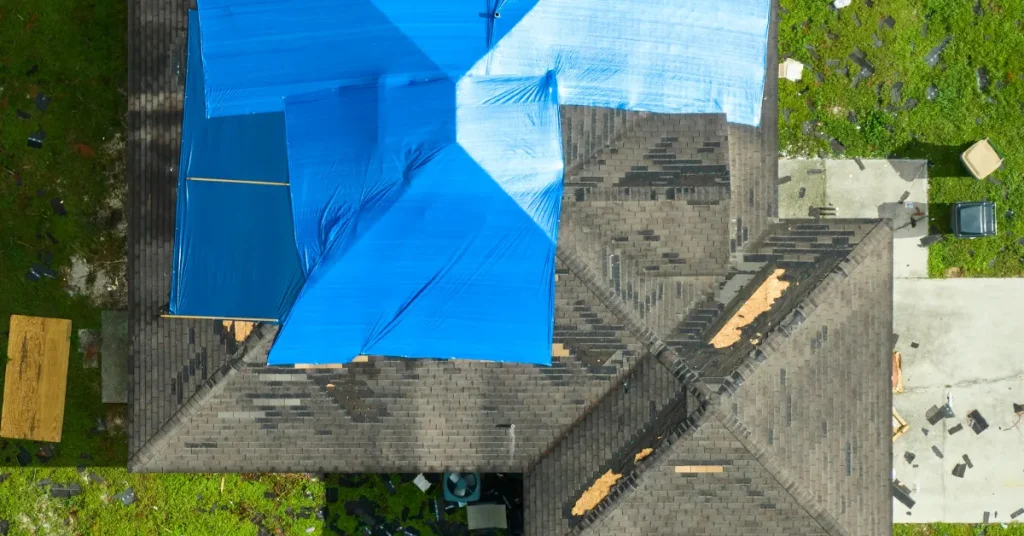
An emergency roof repair often happens in two stages. The first is a temporary repair to stop water intrusion. This might mean securing a tarp over damaged areas, sealing compromised flashing, or covering an opening left by a fallen branch. Temporary work buys time, but it is not built to last through a Central Indiana storm season.
The second stage is the permanent repair. This addresses the actual cause, whether that is damaged underlayment, broken shingles, or failed seals around roof penetrations. Permanent work should follow manufacturer specifications so it performs like the rest of your roof system. A qualified roofing contractor will explain which stage your roof needs and why, so you know exactly what you are paying for.
|
Temporary Repair |
Permanent Repair |
|
|
Main goal |
Stop water from getting in |
Fix the cause of the damage |
|
Common work |
Tarping, sealing flashing, covering openings |
Replacing shingles, underlayment, flashing, or decking |
|
When it happens |
As soon as possible after the storm |
After the inspection and scope of work |
|
How long it lasts |
Until the permanent repair is done |
For years, when built to manufacturer specifications |
|
Warranty |
Not designed for long-term coverage |
Can carry workmanship and manufacturer warranty protection |
What a Proper Emergency Roof Repair Includes
A proper repair looks beyond the visible damage. Expect your roofer to:
- Inspect shingles, flashing, and underlayment around the damaged area
- Complete a decking assessment to find soft spots or water damage
- Review ventilation and attic conditions for hidden moisture
- Examine skylights, chimneys, and other roof penetrations
- Provide photo documentation and a clear scope of work
- Match materials to your existing roof wherever possible
Each step protects roof system integrity and helps prevent secondary damage later.
Should You Repair or Replace After Storm Damage?
Repair makes sense when damage is limited to one area and the rest of the roof is in good shape. A few wind-lifted shingles or a damaged section of flashing on a newer roof is usually a straightforward fix.
Replacement may be the better choice when damage is widespread, when the decking has absorbed water across large areas, or when the roof is near the end of its expected life. Repairing an aging roof can delay replacement without adding long-term value.
An honest assessment should weigh the age of your roof, the extent of the damage, and your plans for the home. Your roofer should show you documented findings, not just give you an opinion.
Can New Shingles Be Matched to Your Existing Roof?
In many cases, yes. Shingle lines change over time, and sun exposure fades color, so an exact match is not always possible. A certified installer knows how to find the closest product within your manufacturer’s current lines. As an Owens Corning® Platinum Preferred contractor with Malarkey® and IKO® partnerships, Moss Roofing has access to a wide range of products. If a close match is not available, we will tell you plainly and talk through your options, including whether a larger section should be replaced for a uniform look.
Will an Emergency Repair Affect Your Roof Warranty?
It can. Many manufacturer warranties expect repairs to follow the manufacturer’s installation guidelines. Work done with mismatched materials or improper methods may put coverage at risk. Before any work begins, ask your roofer how the repair will affect your existing manufacturer warranty and what workmanship warranty they offer. Warranty-backed repairs from a certified installer give you a clear record and protection if a problem shows up later. Keep copies of your invoice, photos, and scope of work with your other home records.
How to Choose a Qualified Roofer After a Storm
After a major storm, your phone and front door may get busy with offers. Take your time. The roofer you choose decides whether the repair holds up for years or needs another visit after the next storm.
Look for a contractor that is licensed and insured, with a local office and a history in your area. Ask for manufacturer certifications you can verify on the manufacturer’s website. Request an itemized estimate and a written workmanship warranty. Ask who your one point of contact will be and what the timeline looks like.
Local accountability matters. A company with roots in Fishers, Carmel, Westfield, or Greenwood will still be here if you have a question next year.
How to Avoid Storm Chasers
Storm chasers are out-of-town crews that follow severe storms from one region to the next. Some leave once the work slows down, taking their warranty promises with them. Watch for these warning signs:
- Door-to-door offers right after a storm
- Pressure to sign a contract on the spot
- Requests for a large deposit before work begins
- No local address or verifiable references
- Prices far below every other estimate
The NRCA advises caution with any bid that sounds too good to be true. A local roofer with a long track record is easier to hold accountable.
How Do You Know a Storm Repair Was Done Correctly?
A good repair leaves a clear paper trail. Your roofer should walk you through what they found, what they fixed, and what materials they used. Before-and-after photos show the work you cannot see from the ground.
Look at the finished area from your yard. Shingles should lie flat, align with surrounding rows, and match closely in color. Flashing around chimneys, vents, and skylights should look tight and sealed. Inside, the stain should stop growing. Watch the area after the next heavy rain to confirm it stays dry.
If anything seems off, call your contractor. A roofer who stands behind their work will come back and make it right under the workmanship warranty.
What Should a Roofer Document After a Storm?
Documentation protects you, especially if you file an insurance claim. A careful roofer records:
- Photos of every damaged area, inside and out
- Notes on hail impact, wind-lifted shingles, and compromised flashing
- The condition of the decking, underlayment, and attic
- Any leaks around skylights, chimneys, or roof penetrations
- Measurements and a written scope of work
These documented findings give your insurance adjuster a clear picture and help you compare estimates fairly.
What Happens During a Free Roof Inspection
For homeowners from Avon to Brownsburg, a free inspection with Moss Roofing starts with a conversation about what you noticed and when. Then our team examines the roof surface, gutters, flashing, and penetrations. We check the attic for moisture, ventilation problems, and wet insulation. If you have a skylight leak, our VELUX®-certified team can assess the unit and its flashing.
After the inspection, we walk you through the photos and explain what we found in plain terms. You receive a clear scope of work and an itemized estimate, with financing through Service Finance® if you prefer to spread the cost. If repair makes sense, we say so. If replacement is the smarter long-term choice, we explain why.
There is no obligation. One point of contact coordinates the details from inspection to final walkthrough.
Storm Damage on Your Roof? Start With an Honest Assessment.
Moss Roofing has protected Indianapolis-area homes since 1991. As an Owens Corning Platinum Preferred contractor, we’ll inspect your roof, document what we find, and walk you through your repair options, with no obligation.


